Longtime Poetry Friday contributor Marcie Flinchum Atkins is celebrating the release of her new picture book, When Twilight Comes: The Animals and Plants That Bring Dusk and Dawn to Life. Congratulations to Marcie! She invited us to share a twilight poem or image, and I chose “Darklight,” by Rosanna Warren, from the Yale Review. It is so atmospheric. The poem begins,
“The moon dragged her string-net bag of shadows through the boughs as we felt our way along the night road, gravel crackling under our feet”
For today’s Poetry Friday selection I chose Tiana Clark’s “My Therapist Wants to Know about My Relationship to Work,” which you can read over at the Poetry Foundation. Plus also, you can listen to the poet herself reading it, which I recommend. This post’s title is from one of its verses. I love how Clark uses language in unexpected ways, as in “I stutter the page” and “I short/my breath.”
“My Therapist Wants to Know About My Relationship to Work” appears in Clark’s most recent collection, Scorched Earth, a finalist for the 2025 National Book Award for Poetry.
This poem by Essex Hemphill is part of “Poetry in Motion,” a collaboration between the Poetry Society of America and New York’s Metropolitan Transit Authority (MTA). The program has been zipping along for more than 30 years, and I’m always happy to bump into the poems on the subway, commuter train, etc. “Poetry in Motion” has spread to other cities as well; for example, Nashville participates during April, National Poetry Month. I saw “Thread” on the shuttle from Grand Central Terminal to the Times Square station, and fell hard for “I am wind/and you/are chimes.”
Read more about the poet and about artist Jeffrey Gibson here.
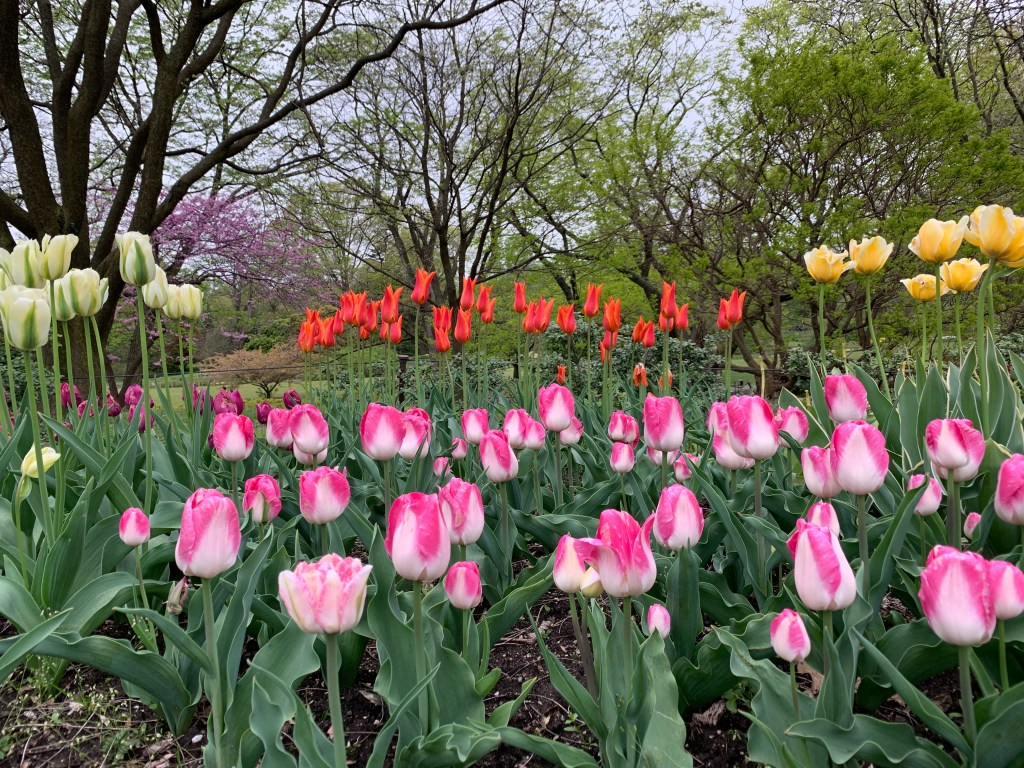
Green tips of tulips are rising out of the earth Although we can’t see their shy peeks After a bomb cyclone dropped a cargo of snow Onto everything under the sun Don’t call it a blizzard! Just imagine the tulips— the Blue Wows, the Honeymoons— Waiting patiently to show us their spring.
(With a first line from Arthur Sze's "Black Center.")
Draft, Susan Thomsen, 2026
This month the Poetry Sisters are looking to poems by Arthur Sze, the current U.S. Poet Laureate, for inspiration. (See Tanita S. Davis's blog for details.) I was intrigued by their idea and open invitation, and decided to join in, taking the first line of Sze's "Black Center" and seeing where it led. The poem presented a real bouquet of images and language, and choosing only one line to borrow was hard. "Black Center" comes from the collection Sight Lines (2019), and you can read the poem at the publisher Copper Canyon.
The Poetry Friday roundup is at the talented Margaret Simon's Reflections on the Teche on February 27th.
I stop somewhere waiting for you
And soon you swoosh by
In a spray of snow. Possibly under control,
Probably not. Bearing straight for the lift line,
Already too far away to hear, “Turn,
Use your edges!” Arms wide, skis parallel,
Unzipped jacket blowing back like
The trailing edges of wings,
How fast that little body hurls down the mountain,
And how beautiful the last-minute swerve.

Draft, Susan Thomsen, 2026
(The first line is the last line of Walt Whitman's "Song of Myself.")

*****
Welcome to Poetry Friday! The roundup is here. “Flurries of Winter” was inspired by a prompt from David Lehman. It’s so fun to see that others have joined me in “stopping somewhere,” too; please see Mr. Linky for the connections.
Thank you so much for visiting. Please drop a link while I heat up the hors d’oeuvres in the kitchen. Welcome to all, including newcomers!
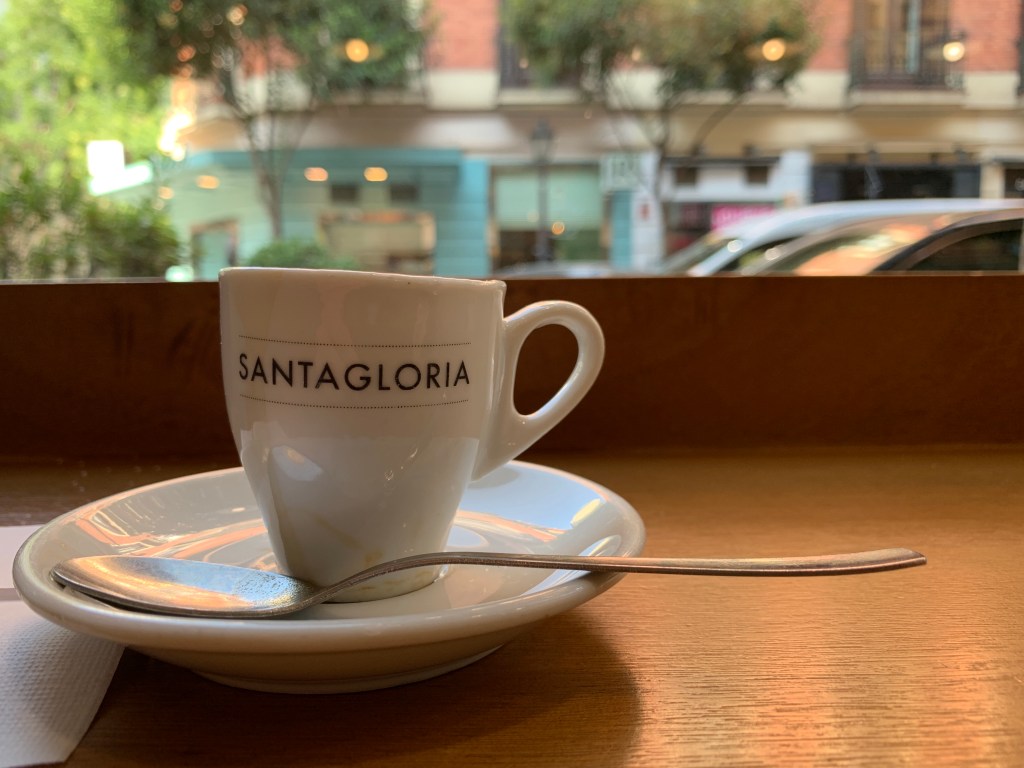
In This Poem You’ll Find Some Coffee
Because I once made a list of
Everything I’d like to see in a poem
And it started with coffee.
I knew what I knew
But when I wrote it all out
It didn’t make me feel happy,
Only a little less mysterious.
I haven’t made a list of
Everybody I’d like to
See still alive, but at the top
Would be Mom, Dad, and Auntie.
Auntie told the cousins
That my apartment wasn’t
Big enough to swing a cat in
And that my mother loaded
The dishwasher wrong.
Mom and I liked to drink coffee
Every day around three
Sometimes she’d made a cake and
We’d have that, too.
I can’t remember
If cake is on my list
But it should be.
Dad talked to me in Spanish
He was from Texas and he
Loved to speak Spanish
When I got to sixth grade
I knew madre, padre, casa, and
All the Mexican phrases for hurry up.
I never told any of them
About being drunk in the Village
And ordering espresso when I meant
Cappuccino and how disappointed
I was in the size of the cup and the taste.
I’d love a conversation with Auntie
About the right ways to load a dishwasher.
Draft, Susan Thomsen, 2026*****
I wrote this while reading Human Hours, Catherine Barnett's 2018 collection published by Graywolf Press. I liked the way one of the poems started with the title as the first line, which solves a problem I was worrying about last week. Also, in "Uncertainty Principle at Dawn," the speaker mentioned "a list of obsessions" (I don't want to quote any more; it's so good and I don't want to spoil it), and I thought, "Oh, lists, yes, I have lists galore!"
Robyn Hood Black rounds up the Poetry Friday contributions on February 13th.
Please join me here at Chicken Spaghetti for Poetry Friday next week, when I'll be wearing a colorful hostess outfit and passing canapés. If you'd like to, you can write from the same prompt I used: begin a poem with the last line of Walt Whitman's "Song of Myself," which is “I stop somewhere waiting for you.” Details here. First-time participants are always welcome.
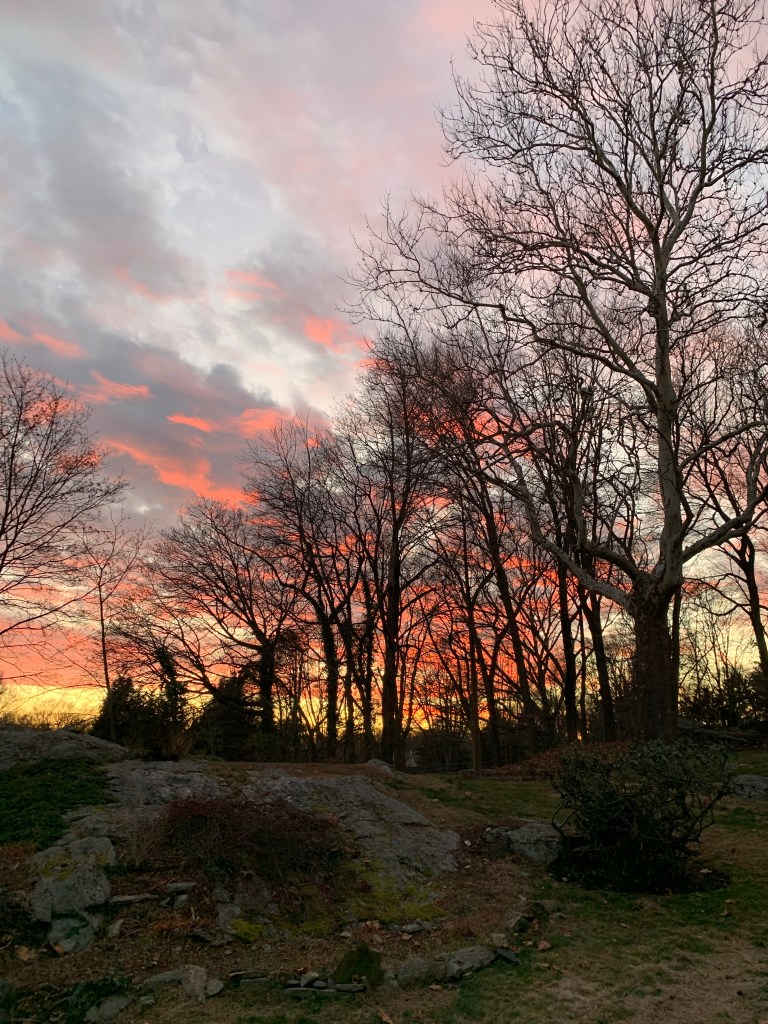
Photo by Susan Thomsen
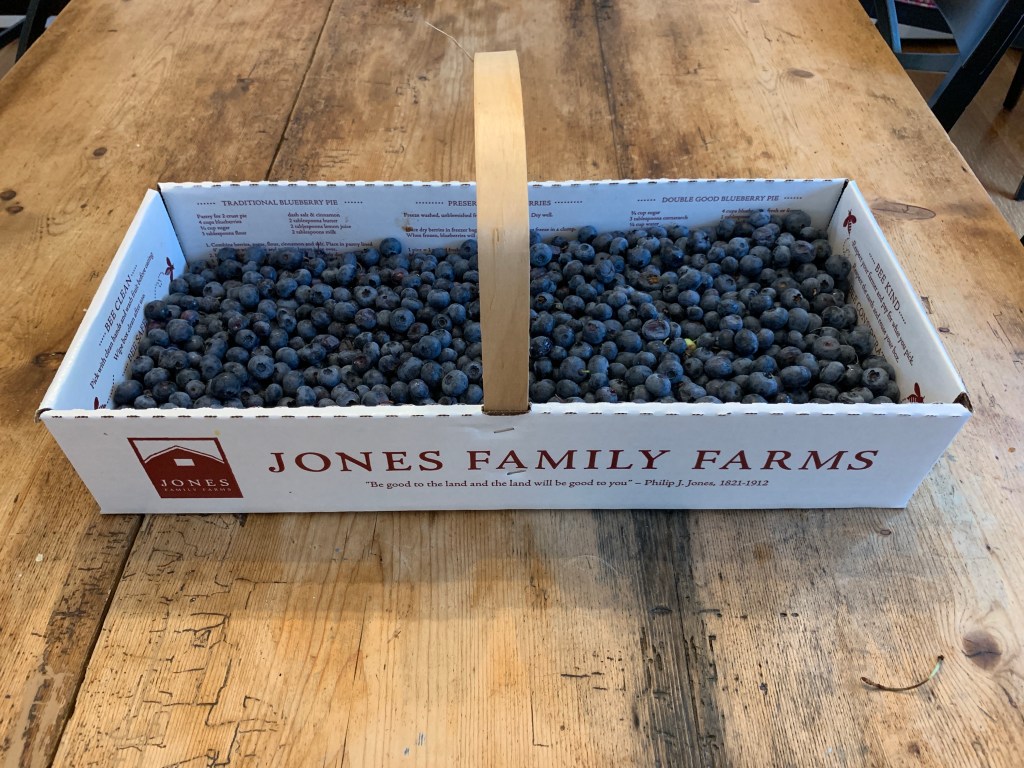
Chen Chen told the Yale Review that he usually starts a poem with the title. I love his “Tale of the Blueberries” and his words about the process of creating, “picking up an odd clue here, an ordinary mystery there.”
Titles often elude me, so just for fun (and inspiration), I looked through the Yale Review‘s Poems of the Week for recent ones, and found many that appealed, including “Fan Mail from Some Flounder?” (Harryette Mullen), “Pearly Everlasting” (Alissa Quart), “Literal Country Music” (Samuel Cheney), and “In My Terrible Years” (Aldo Amparán).
For February 20th, I have written to a prompt from David Lehman (of the Best American Poetry series): begin a poem with the last line of Walt Whitman’s “Song of Myself, ” which is “I stop somewhere waiting for you.” Do join me if you’d like. I even asked AI to suggest titles for this poem, but they were SEO-oriented duds. Stay tuned.
The Poetry Friday roundup for February 6th is at Molly Hogan’s Nix the Comfort Zone.
John Ashbery’s poem “A Worldly Country” (links below) initially ran in the November 7th, 2005, issue of the New Yorker, and this week it’s the subject of the magazine’s poetry podcast with the host (and poetry editor) Kevin Young and his guest, the poet April Bernard. She chose the Ashbery to read and talk about, noting “I love the way that he’s so hard to understand but when you’re in the middle of his poem, it makes perfect sense—even if you couldn’t possibly paraphrase it to anyone else.” She and Young also liken this poem and other Ashbery works to collage. The rhyming couplets provide footholds for us readers if we don’t know quite where we are.
I really appreciate that approach to poetry that might seem difficult at first. To be kind of simple about it, just jump in. That’s what I did and took pleasure in all the crazy images whirling by. And there’s more to it, of course. Even though it was published more than twenty years ago, “A Worldly Country” is timely; Bernard says it talks about “how the chaos in the outer world comes into the inner world.”
After the Ashbery discussion, Bernard reads her poem “Beagle or Something” (April 23, 2007, issue) and among other topics, talks about the role of play in poetry. I laughed when she told Young that she made up several composers’ names and titles of works in Romanticism, the book the poem appears in. I didn’t know Bernard’s poetry before the podcast; Romanticism is now on the list for my library errands tomorrow.
At the first of the year I was thinking of Walt Whitman and New York, and then somehow wandered over to the West Coast with Allen Ginsberg in San Francisco. I wonder which poem(s) Ginsberg had in mind when he wrote this line in “A Supermarket in California” (1955), “What thoughts I have of you tonight, Walt Whitman, for I walked down the sidestreets under the trees with a headache self-conscious looking at the full moon.”
Several sources say Ginsberg is responding to Whitman’s “Song of Myself (1855), which begins, “I celebrate myself, and sing myself,/And what I assume you shall assume,/For every atom belonging to me as good belongs to you.”
One of my favorite poetic lists appears in Ginsberg’s “Supermarket.” I don’t want to spoil anything if you haven’t read the poem yet, but the list includes avocados, peaches, and García Lorca. Speaking of whom, I should mention that the Spanish poet, too, paid homage to WW in “Ode to Walt Whitman”; an English translation appeared in Poetry in 1955. (Ben Belitt was the translator.)
¡Hay mas! There’s more. If you have a New Yorker subscription, you can read Ariel Francisco’s modern-day ode to García Lorca’s ode: “Along the East River and in the Bronx Young Men Were Singing” (March 11, 2019). I recommend Francisco’s book A Sinking Ship Is Still a Ship, and want to read his others.
This Whitman chasing just might be endless. The next stop found me in Chile, with Martín Espada’s translation of Pablo Neruda’s “Ode to Walt Whitman,” over at the University of Pennsylvania publication Jacket 2. I love these short lines. “But/your voice/sings/in the train stations/on the edge of town.”
Given the news lately, I recommend following a poet around for a while. Doing so sure helped my state of mind.
The Poetry Friday roundup on January 23rd at Tabatha Yeatts’ place, The Opposite of Indifference. On February 20th, I’m going to try a prompt and post a Whitman-inspired poem, too. Please join me if you would like to! The details are here.
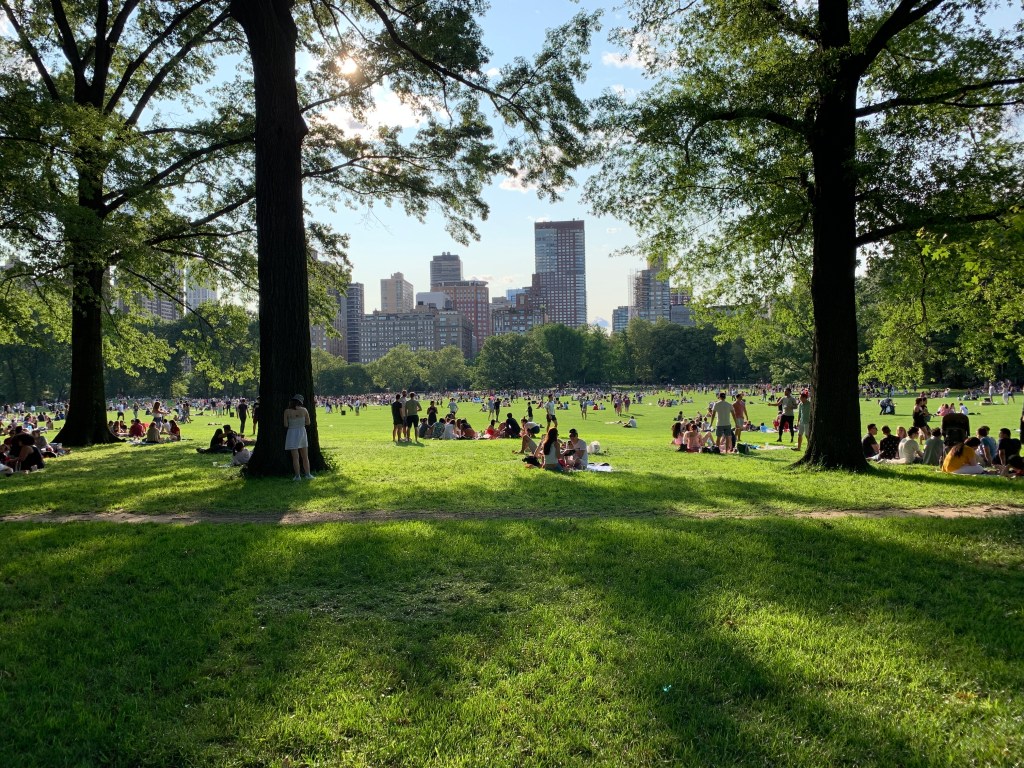
Photo by Susan Thomsen.Sheep Meadow, Central Park, 2019.
David Lehman mentions a poetry prompt in his intro to The Best American Poetry 2025 that intrigued me, and that is to write a short poem starting with the final line of Whitman’s “Song of Myself”: “I stop somewhere waiting for you.” Back in 2016 at the American Scholar, Lehman held a little contest with the same prompt, and I look forward to reading the winners after I come up with my own poem. (I don’t want to lift anyone’s line inadvertently!)
Please join me if you would like to. I’m planning to post a “I stop somewhere waiting for you”-inspired poem on Friday, February 20th.
 Chicken Spaghetti